Tuesday, April 7, 2020

Lesson to be learned from COVID-19

A picture I took on the highway while going home

COVID-19 is a global pandemic that not only affects public health and safety, but it also affects history as it will be an unforgettable event for all of us. Everything we say or do is accounted for in history, even if it is something minor. Most information is easily accessible through the internet and with the growing use and innovation of technology, it becomes much easier to find. For future reference, it is important to be able to analyze historic events such as this pandemic to aid people in any situation they encounter. Just as Kurt Vonnegut wrote Slaughterhouse-Five to express his experience and feelings towards World War II, articles and responses on the COVID-19 pandemic are outlets for others in the future to understand what we are currently going through as well. I believe that there is a lot that we and the future must learn from this pandemic. A huge issue that we are encountering today is the lack of readiness. My sister and relatives are working in the frontlines in hospitals, risking their lives to protect others. The biggest problem is the lack of resources they need in order to not only protect the patients but also protect their healthcare workers. We live in NYC where it is the epicenter of this pandemic and it has taken a huge toll on neighborhoods such as mine. I live in Elmhurst where they call it “the epicenter of the epicenter”. The reason why my area has been affected badly by the virus is that our local hospital has become a testing and rehabilitation site for COVID-19. With people walking around not knowing whether or not they have the virus after visiting the hospital to get tested, it increases the likelihood for my fellow neighbors to get infected. Elmhurst has one of the highest rates of severely crowded housing in NYC. When someone gets infected here, it infects more than one family and can easily spread to a large group of people. Although the US government was prepared with their stimulus act, they were not prepared with enough resources for a pandemic. There is a shortage of face masks (the ones that actually protect you), ventilators, hospital beds, hospital space, etc. It has almost been 3 months since it has been declared an international concern and the US is still underprepared with resources. Thankfully, China is shipping over its own resources to help control this, and both local and international people are sending aid in some way as well. The whole world is in a war against this virus and we must come together to defeat this, just like how alliances fought together against their enemies in World War II. This blog post that I am typing will hopefully be an outlet for others in the future to help understand the possible severity of situations like this and put more focus on preparation. Life is about trial and error. We must learn from this pandemic to ensure that this type of situation will not become this severe again.  


A picture of my sister wearing 2 masks because she has to reuse her n95 mask due to shortage


How Have Epidemics Changed?

Everyone must have known the “SARS”(Severe acute respiratory syndrome) in 2003, a terrible epidemic, for which many fresh lives have left this beautiful world. This year, December 2019, a new coronavirus was discovered in Wuhan, Hubei. The "new crown" broke out and spread throughout the country. At this time, during the Spring Festival in china, whether it is on a mobile phone, TV, or in the community, the words people hear the most are not "Happy New Year, congratulations on making a fortune", but "wash hands frequently, ventilate less, go out less, you must wear a mask when going out" Propaganda, and the cause of this phenomenon is the protagonist "new coronavirus" that has spread from Wuhan, and must be controlled and isolated by the whole people.

Passengers outside the Shanghai Railway During COVID-19
At the beginning of the epidemic, it was seen from the TV news network that there were several cases of virus infected people in Wuhan. People didn't care much, thought that Wuhan was so far away from us, and the virus could not spread to the United States, so we lived and went to school as usual, and everything was calm. But people were wrong, the virus began to spread viciously, from the original cases to dozens, hundreds and thousands. Many people in Wuhan returned to their hometown because of the reunion in the new year. The virus began to spread to the United States, but Americans stills didn’t realize the rapid spread of the virus, people would still go out and travel to countries such as Italy which is having a severe COVID-19 outspread. Soon, the number of people infected with the virus in the United States begin to rise from the first few to more than 20,000 people, and now almost 400,000 people have been infected with the virus which surpasses China and Italy. People start to panic after state emergency have been announced from multiple states.

Times Square During COVID-19
In the past, more than a hundred years ago, the primary focus of epidemiology was on containing the spread of epidemics such as cholera, SARS, and polio. We spread knowledge about disease transmission, improved sanitation, and provided vaccinations which have made many of these diseases either manageable or eradicated them. The primary challenge for stopping the spread of COVID-19 has shifted to focusing on lifestyle-related complaints such as obesity, inactivity, and no freedom of choice. The United States has a have weak social norms and a high tolerance of unusual behavior compare to other countries like China and Japan which causes the government to have a hard time issuing new rules and requirements to help prevent the spread of the virus. Often, these can be more difficult to treat given that the lifestyle changes that they require both individuals and government to make are more far-reaching and complex than simply improving sanitation or getting vaccinated. 


Time waits for no one! Time is precious! We are racing against the virus and the epidemic with all our strength. History have shown that we as a nation have the ability to fight against the treats in our path. As a result, there is a greater need to educate the public and to encourage changes in habits and behavior, such as going out, ordering deliveries and crowd gathering. The whole nation needs to be involved because everyone has an obligation to help stop the spread of the virus. We also need to pay tribute to the people who are persistent in helping us fight against the virus. In order to save protective equipment, they often drink less water, go to the bathroom less, wear heavy protective clothing, and their faces are worn due to wearing masks for a long time. Even some medical staff are infected with virus because of the day and night treatment work. They are the most respectable and worthy of our study! Now is the time for us to come together as one and defeat this virus once more.
            

Americans Involvement in World War II


I decided to compare the experience of war provided by Kurt Vonnegut in Slaughterhouse-Five to the “Americans and the Holocaust” virtual exhibit from the website of Washington D.C.’s Holocaust museum. I find it interesting that when we discuss wars or any past historical events, it is an expected tendency to categorize all soldiers or people from a country with having the same intentions or knowledge base. Something that stood out to me in this virtual exhibit was that although Americans supported Jews and other minorities during the second World War, the exhibit emphasizes that Americans could have done more to prevent the countless murders which occurred. As most perspectives of World War II attempt to regard, the Holocaust Museum’s exhibit focuses solely on the Jewish perspective and how the Jews caught by the Germans were let down by so many countries. 
After reading Slaughterhouse-Five, I was opened up to the perspective of American soldiers that were dragged into the war, such as Billy Pilgrim. At times, it can be easy to disregard the damage the second world war has on the outside countries which participated in the war, although the countries may have not been as prominently acknowledged in our perception of history. The exhibit later displays the efforts Americans put in to putting an end to the war and Nazism occuring during the time, however, as many Americans protested Nazism, including a petition created in the spring of 1933 in which tens of thousands Americans signed in opposition to the Nazi’s treatment of Jews. Vonnegut seemed to represent Billy Pilgrim as one of the sympathetic Americans that not only wanted the war to end, but wanted those around him to be safe as it was difficult to constantly see death and pain surrounding him. The exhibit and Vonnegut both make the clear point that this war was a bloody one; people were dying and getting hurt constantly, sometimes even from those who should not be in opposition to them. The Holocaust Museum also displays a video as part of their exhibit which shows clips of many different protests held in America of Americans coming together, marching against Nazism and anti-semitism. These protests were held before the American government involved themselves with the war. As I mentioned before, it can be easy to presume an entire country has the same goals within a war, however, these American citizens holding protests and marches proved to provide support for the Jews being abused by Hitler far before the American government took action. 

I believe the “Americans and the Holocaust” virtual exhibit provided useful infortmation regarding the second world war and America’s involvement in it. It was interesting to compare Vonnegut’s experiences expressed through Billy Pilgrim to the exhibit, as the exhibit was more factual and provided a clear timeline of Americans going through this war, while Vonnegut illustrates a more emotional and empathetic narrative to the American soldiers in the war. I recommend others to look through this exhibit themselves, as it has many different parts to observe!


-Becca Schwartz

Monday, April 6, 2020

Villains Could Be Humane


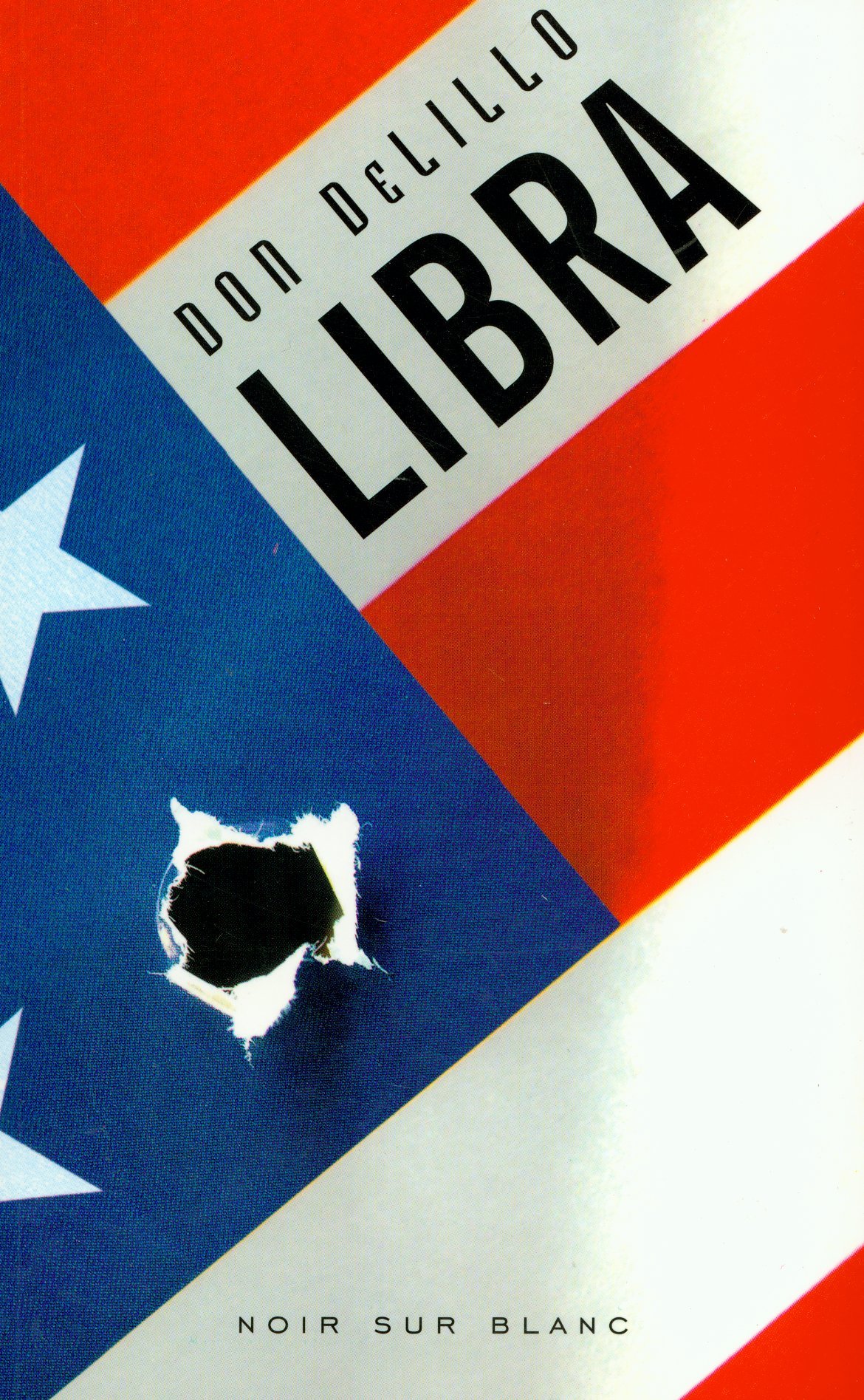
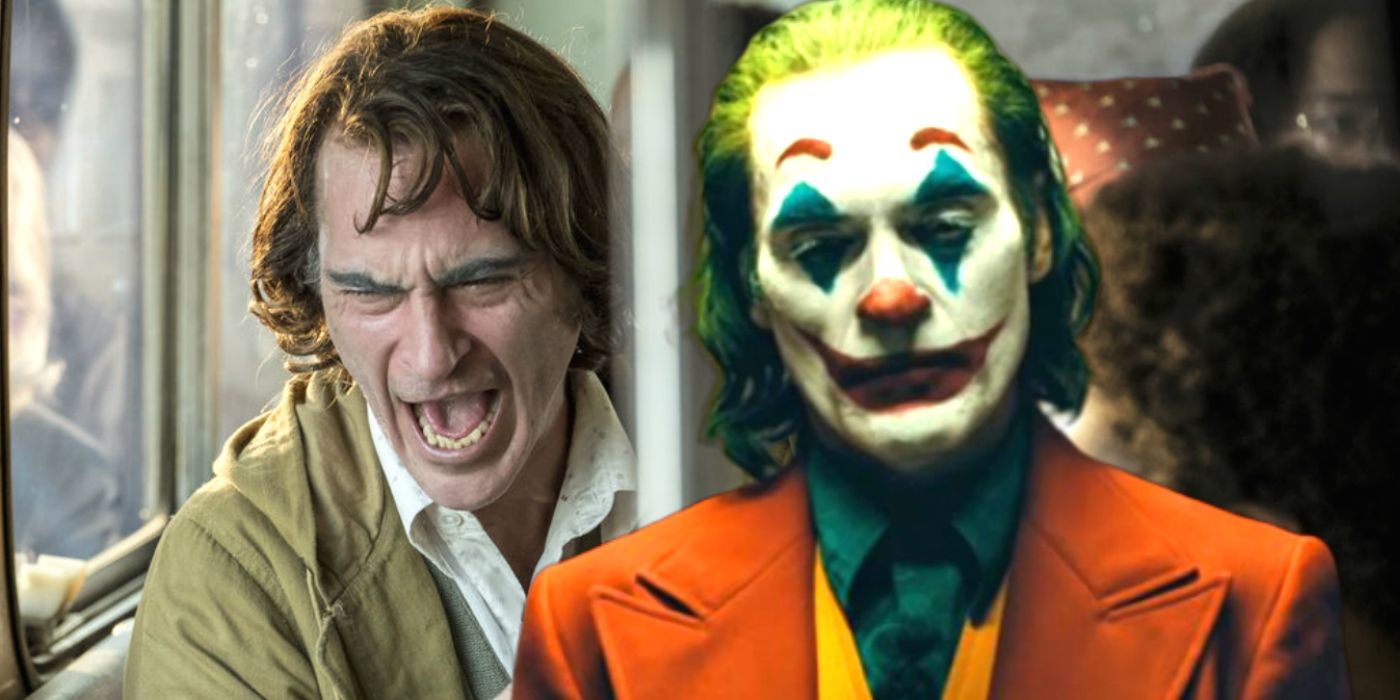
What does President John F. Kennedy’s assassinator and Batman’s arch nemesis have in common? Well, Lee Harvey Oswald and the Joker both have been written off as villains in society. Whether it is fictional or a real life event, the public has been informed to fear and oppose these people due to their heinous and inhumane acts. However, if you were to learn about their stories before they were considered evil or corrupt, would your perspective change? Don DeLillo, the author of Libra, and Todd Phillips, the director of Joker, both used Lee’s and Joker’s background information and their situations to rewrite their storylines in order to create more humane “villains.”

Libra: 9788373922204: Amazon.com: Books
            
            Other than being considered the antagonist in someone else's story, Lee and the Joker share similar background situations. We learn that they were both bullied, tormented, isolated, and mistreated by their peers. Already from early years in life they endured many traumas, and knowing this causes the audience to sympathize for them. In Libra, Lee struggled with dyslexia and was bullied almost every day. It got so bad that he would skip school and was served with truancy. Lee did not have friends, nor did he trust anybody enough to confide in. The only place where he felt safe was the library because books and learning about Communist and Marxist figures were the only things he felt like he could connect to. Spending time learning about Trotsky, Lenin, and Stalin sets the tone as to why he opposed Democracy and supported Communist/Marxists efforts; these figures have been through isolation and torment, therefore, their efforts could serve the public best. As for the Joker, we learn that his name was Arthur Fleck, and all he wanted to be was a stand-up comedian. Comedy to him was about joyfulness and laughter. He loved kids, loved to smile and he took care of his mother, despite the fact that he was dealing with his own mental health issues due to abuse as a child. In the beginning of the film he talks to his clinical social worker and states, “I hope my death makes more cents than my life.” In this scene you feel for him because he does not have anybody to talk to because he is deemed a “freak.” Between these two characters their innocence were taken away from them due to societal factors, and some of these factors are what pushed them to do the things that they did. Since the audience has learned about Lee’s and Joker’s struggles in life, you are forced to see them in a more humane way to the point where you are able to sympathize for them. 


Even though DeLillo and Phillips  both try to recreate humane villains, they take different approaches. DeLillo used a factual event, the assassination of JFK and the Cold War, and rewrote the story based off the theme of conspiracy. The conspiracy aspect of the plot was that three FBI agents manipulated Lee into assassinating the President. DeLillo stylistically and structurally designed abstract hypotheses, altered reality, introduced characters, and even added some of his own critiques into the text. On the other hand, Phillips directed Joker as a downward spiral in which Arthur Fleck is falling into madness, and slowly becomes the Joker. The audience first sees how Arthur yearns to be a part of society but is continuously mistreated and disregarded.  Due to continued abonnement and mistreatment, Arthur turns into the Joker and realizes that his life is a comedy in which people treat others with disregard and disrespect for their own self-gain. Ironically, the Joker becomes a political figure for the lower social class. Despite the fact these are different realities and different approaches, DeLillo and Phillips explore the origins and the stories of Lee and Joker. 

By focusing on the situations and identity of Lee and Joker, DeLillo and Phillips emphasize that stories are not one-sided but rather filled with complexity. I personally learned that life is all about perspective and that society has to do better. Society is based off human interaction where we grow, protect, and support one another, and it is up to us to make sure that everybody is a part of that, so we do not create more villains.
By: Etana Sissoko


In the face of crisis. now vs. past.

The COVID-19 is causing one of the most significant crises we have seen in American history. The role of culture certainly plays a vital role during this dire time. Since the COVID-19 crisis is a global pandemic, the cultural differences between countries and regions are shown in this pandemic.  

Growing up in Hong Kong, coronavirus is a familiar term to me since it was one of the most affected areas during the SARS outbreak in 2003 (Severe acute respiratory syndrome-related coronavirus) I still remember my preschool was canceled due to the SARS outbreak. I had to stay home for months. History repeats itself, my school got canceled again due to coronavirus 17 years later. Different from last time, I witnessed how this new coronavirus developed over time and how it transform from an epidemic to a global pandemic.


Hong Kong People wearing masks during the SARS outbreak

Starting from early January, I have already seen numerous friends from Hong Kong sharing Hong Kong news articles saying how the COVID-19 could be as detrimental as SARS from 2003. People in Hong Kong learned a hard lesson from SARS and started to take serious precautions to prevent the virus. Hong Kong is also known for having a "tight and tense" social culture, which played an essential role in helping the city to contain the virus and demonstrated a great response to COVID-19. Both being metropolitan cities, New York City has a different drastic situation due to the various social cultures, government regulations, experiences in dealing with a pandemic situation.


Empty New York City streets due to COVID-19

The United States has a relatively loose social habit (have weak social norms and a high tolerance of deviant behavior) compare to countries like Japan and Singapore. This has caused the government a hard time instituting new rules to take preventive measures. Other than the social cultures, unclear government guidances also contribute to the severe outbreak in America. The conflicts among political parties, state governments, and federal government caused the slow response to COVID-19, and now America is already the area with the highest infection number. America is one of the strongest countries in science and medical fields with abundant resources and advance manufacturers. The United States is fully capable of dealing with this virus, but first, it should act like its name, united as one, like how it dealt with the WWII crisis. 

“Arsenal of Democracy,” this is the slogan used by U.S. President Franklin D. Roosevelt during WWII to describe how efficient the United States was in utilizing its resources and providing essential support to the Allies during the WWII crisis. Citizens, nonprofits, and corporates need to take proactive actions in aiding the government to deal with the virus, and most importantly, strictly abide by the rules even when they sound unpleasant. 

American history has shown us we have the ability to deal with a collective threat and defeat our common enemy. Now is the time for Americans to come together once more and defeat this virus as one. 


Distorted Realities and The Act of Killing (What Even is a Communist, Anyway?)

Quarantine is a word that has a completely different connotation for me than it did a month ago. The emotional tenor of these past few weeks has made the fear and confusion surrounding this virus a palpable reality– a reality similar to that of cold war America. The only difference, though, is that this reality exists more prominently in the domestic sphere– at home. Don’t get me wrong, seeing Times Square completely empty is an unprecedented– and alarming– indicator of something gone wrong, but the focus of the “flatten the curve” rhetoric has been centered around staying home in isolation from others. Therefore, my days are dedicated to finding unconventional ways of feeling productive as a means to put the threat of destruction evoked from COVID-19 on the backburner.

One way that I’ve been able to drown out all the chaos surrounding the virus is through film. In movies, realities are created and, at the same time, destructed to make the viewer comfortable, or uncomfortable, with the fact that our lives resemble or diverge from the reality shown on screen. In many ways, the documentary masters the art of “creating” and “destructing” realities.

I recently watched The Act of Killing– a documentary directed by Joshua Oppenheimer that brings light to Indonesia’s complicated history of executing “communists.” Here, Oppenheimer is seen to follow the contemporary lives of some of Indonesia’s most infamous “communist” executioners of 1965-66. This documentary elicited a number of emotional responses for me, but the biggest thing I took away was the way these executioners framed history and therein imposed their own reality on others. Oppenheimer gives Anwar Congo and Herman Koto– two of Indonesia’s most lethal executioners– a second chance in telling their side of the story and the result is more disturbing than you could imagine.

Throughout the film, Oppenheimer tasks Congo and a few of the other Indonesian executioners with making a “movie” aimed to depict the brutality of the murders they took part in 50 years ago. Here, it is revealed to the viewer the way that not only the executioners have become desensitized to death, but also the way that the word “communist” has become stigmatized and used to characterize anyone that is a threat to the larger Indonesian state. This reality built around the “communist” as being the biggest threat to civilization has many resemblances with Vietnam war America where a similar attitude toward communism was made palpable by writers like Joan Didion, Kurt Vonnegut and Michael Herr. Therefore, this film reveals the distorted “reality” around “communism” and contextualizes it to the global narrative.

In many ways that Portrait of Jason disturbed me, so too did The Act of Killing. In addition to the documentary’s ability to expose this distorted reality, it also raises the same ethical questions around the director’s intention in documenting this reality in the first place. For Shirley Clarke, I could understand why she was passionate about filming Jason in the beginning, but toward the end I was left questioning her motive. In the same way, I was left questioning the motive and intention of Joshua Oppenheimer after he voluntarily allowed the Indonesian executers to create their own film depicting what they remember about the 1965-66 mass executions which seemed primarily to just glorify death and execution while further stigmatizing “communism”– which really just meant being conceived of as a threat in the eyes of the state. Nevertheless what Oppenheimer’s intentions were, the film does an incredible job of exposing a distorted reality that we cannot revert back to… I guess one of the costs of telling any story is to challenge the storyteller’s motivation behind telling it in the first place.

Anyways, please add this documentary to your quarantine watch list


Stay safe
–Sam Elbedeiwy


Reigniting Vonnegut’s War Against War During the Age of COVID-19

             As I was struggling to come up with ideas for what to write about for my event outreach blog post, I decided to revisit a past essay I had written where I explored Vonnegut’s anti-war messages in Slaughterhouse-Five. In Slaughterhouse-Five, we follow the life and experiences of Billy Pilgrim, honing-in on his time as a chaplain’s assistant during World War II. In my thesis for the piece, I make the argument that Slaughterhouse-Five has a “universal” anti-war message that “war is dehumanizing.” Additionally, I comment on how the relationship between sex, power, and violence depicted in the novel “attempts to comment on the baseless, primal motivations which dictate war decision-making instead of pure intellectual reasoning,” and I highlight the effect of the “war’s lack of free will which dispels people’s freedom of choice.”
              I handed in this essay on March 4th. At this time, the COVID-19 pandemic was just beginning to find its bearings, but not yet did it reach its full-force effect. Classes were still in session and life was running as normally scheduled. It was only 5 days after on March 9 where we received our first email from the Office of the President detailing how classes were to be brought online, and life at Fordham was about to get a whole lot different. The reality of the situation had not yet cemented itself into what is now the “new normal” for American life.
As I reread this essay a month later, and a month into living in this outbreak, it is shocking to me how my language used in this essay to describe the horrors and limitations of war is so unintendedly applicable to our current reality under the coronavirus pandemic. In originally writing this essay, I was so focused on how these ideas apply to traditional wartime efforts filled with guns, violence, and primal power trips. Reflecting on this essay now under the lens of corona, I realize how the pandemic is our generation’s world war where we are globally combatting a common enemy: COVID-19. The idea of war has taken a new form which most of us had never expected. This global war against COVID-19 truly bleeds with irony as a history that has not only repeated itself, but rewrites itself as it takes a new, unassuming shape.
One of the first points I make in my essay is that “war is dehumanizing.” Under corona, our new way of life of being restricted to staying home and social distancing is very similarly dehumanizing. The most central part of human life is the relationships we build and the interactions we have with others, and by forcing ourselves into isolation, we harm a vital part of our emotional wellbeing.
Additionally, in my essay I discuss the “baseless, primal motivations which dictate war decision-making instead of pure intellectual reasoning.” Immediately, thoughts rush into my head of the nationwide toilet paper shortage we experienced due to people baselessly buying it in mass quantities upon hearing about the outbreak. Although this situation was laughable, realizing how war makes people think and act irrationally really cemented with this connection.
Finally, in my essay I highlighted how “war’s lack of free will dispels people’s freedom of choice.” Although we are not drafted into a traditional war where we must fight and carry out orders given by our commanders, we are definitely drafted into a new way of life where we forced to live under the orders given out by our mayors, governors, and president. Simple freedom’s to even be able to go outside and take a walk or go to the park are being extinguished. Our freedom to choose what we want to do is no longer an option, and instead, we must adhere to the rules set by our government in order to ensure safety.
The language I used in my original essay is so ironic to our current situation that it actually makes me laugh. Who am I to kid myself and act so shocked at how people are reacting to this virus when these reactions are so embedded into the very history of human nature? When I originally wrote my essay, my scope for what war had meant to me was so limited, but reflecting on it now, COVID-19 has opened that idea up tremendously. By realizing that corona is yet another war for us to face, I am comforted in the sense that this is a history that we have experienced before. Although this history is being rewritten into a new, unknown semblance that we have not dealt with before, I am confident that similarly to wars and hardships we have faced in the past, we will overcome and win again.

By Bridget Iadanza

A Closer Look at Citizen (X2)

Mohema Hussain, Admir Kasneci,Wesley Hoa, Lucas Fee Presentation Explanation : For our presentation, we decided to create text message con...